Nebraska, Revisited
Why "Nebraska" is a skeleton key for understanding Bruce Springsteen's discography

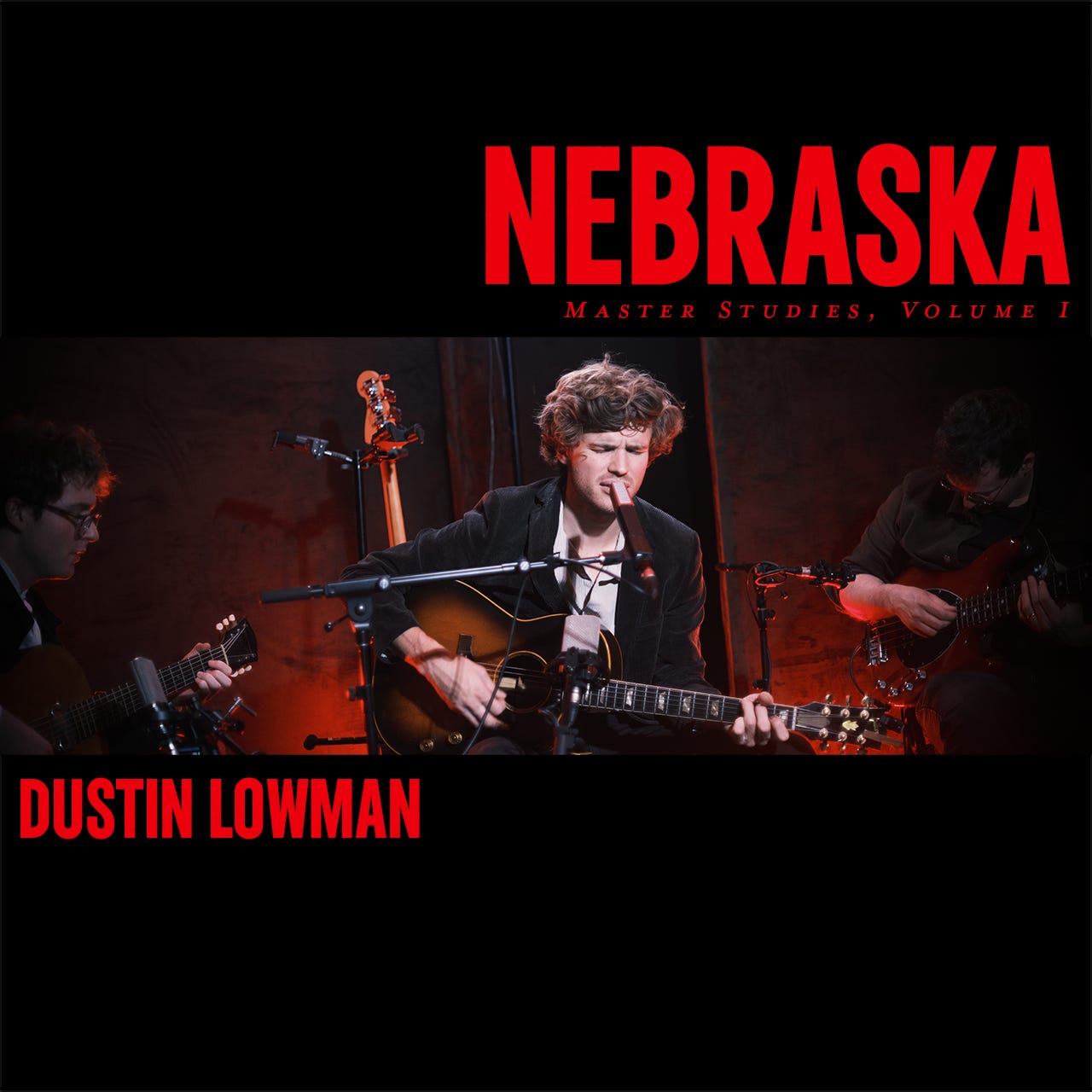
My full cover of Bruce Springsteen’s Nebraska is available on Bandcamp!
My trio and I covered Bruce Springsteen’s 1982 album Nebraska. An abridged version will be available on Spotify on Friday, June 12. The full show is available to purchase on Bandcamp now!
Upcoming Shows
Wednesday, 6/3 | Arlene’s Grocery | Brooklyn, NY | 7:00 PM (Tickets)
Saturday, 6/27 | Rye Arts Center | Rye, NY | 7:00 PM (Tickets)
Thursday, 7/16 | Vintage Beano & Vino Lounge | Medford, NY
Sunday, 7/19 | Cafe Wha? | Manhattan, NY
Only The Lonely
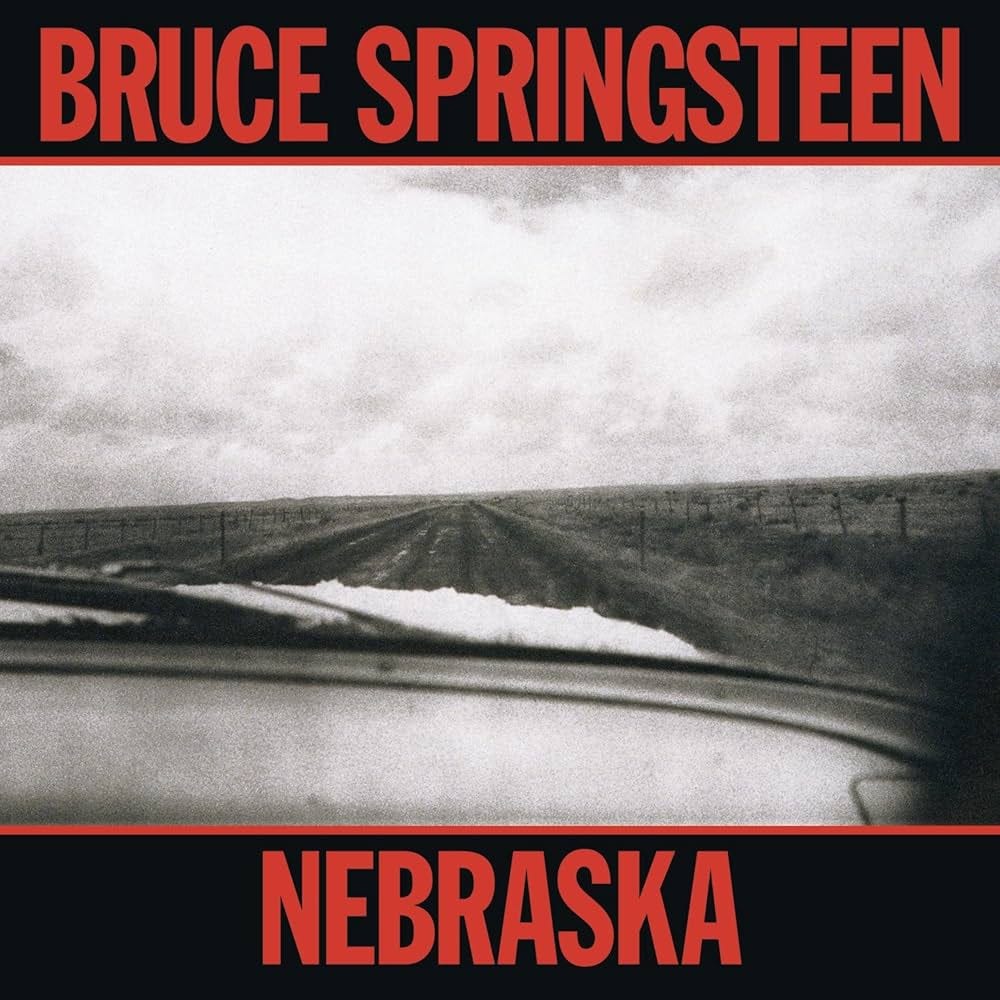
Various things have always prevented me from loving Bruce Springsteen’s Nebraska. Springsteen is a less dynamic solo performer than others who have reflective — not to say maudlin — folk albums to their names: His arpeggiated picking pattern, the add9 he sticks on so many V chords, and his too-often unintelligible drawl sink many of Nebraska’s tracks into a muck of sameness that stops their images popping, their narratives flowing, their themes taking wing. In terms of composition and performance, I much prefer the youth-in-euphoric-torment of The Wild, The Innocent, & The E Street Shuffle and the pop revivalism of Born in the U.S.A.
Still, something has always drawn me to Nebraska that hasn’t drawn me to any other Springsteen album. I bought it at the Barnes & Noble in Westport, CT, in 2009, when I was sixteen. Unlike Springsteen’s scriptural staples, it sounded not like a rallying cry for boho dreamers or blue-collar strugglers; it sounded like a lullaby for the chronically lonely, like a person alone in his room. In those days, I spent a lot of time alone in my room, too, with my guitar, my notebook, and a heart full of longing. I couldn’t really understand the words Springsteen was saying. But I could understand what he was feeling.
Fast forward to 2025. Two equal and opposite motivations drew me back into Nebraska: the intrinsic joy of spelunking in the work of a totemic troubadour, and the extrinsic carrot-on-a-stick of growing my social media following. In a YouTube series in which I ranked all of Bruce Springsteen’s studio albums (yes, even Human Touch and High Hopes), I placed Nebraska toward the bottom of his A tier, citing all the criticisms I cited above, but still moved by its melancholy magnetism. I recognized in it something important, something I recognized nowhere else in Springsteen’s discography.
To coincide with the end of the tier list series, I scheduled a performance at Sunny’s, a bar at an outer extremity of Brooklyn’s bohemian galaxy that preserves the best features of the 1930s and jettisons the worst. I would play twenty songs from Springsteen’s songbook that described the arc of his artistic evolution. In making the selections, I found myself wanting to play Nebraska. Not “Nebraska,” not a couple of its standouts, but the whole album.
Why Nebraska? Why, if I had all those gripes with its conception, did Nebraska insist on such a disproportionately prominent role in this performance? Why, in parallel, did Nebraska insist on being the subject of the (disastrously executed) Springsteen biopic, Deliver Me From Nowhere?
Here’s what I concluded: Nebraska is a skeleton key for appreciating the rest of Bruce Springsteen’s discography. For several reasons.
The Teeth Of Nebraska’s Skeleton Key
Reason 1: Nebraska is Bruce Springsteen’s most naked album. Springsteen did record Nebraska more or less alone in his bedroom. The spotlight shines starkly on him and his guitar, with some modest, moody overdubs rising from the shadows. Musically, Nebraska is about as naked, as stripped, as an album can get.
Nebraska is also the first album in Springsteen’s discography that features unadorned autobiographical writing. Springsteen appeared in earlier songs, but always in a costume — “The boy-prophet” in “The E Street Shuffle”; “Bad Scooter” in “Tenth Avenue Freeze-Out”; a second-person “Cain” in “Adam Raised a Cain” — and always with some sort of embellishment — ecstatic poetry, bare-chested bravura, heavy metal rage — that turned true-enough stories into tall tales.
None of that embellishment warps Nebraska’s autobiographical accounts. If the singer of “Mansion on the Hill” fears we might see his confused childhood envy as weakness, he doesn’t show it. If the dreamer in “My Father’s House” worries we’ll see his tremors as unmanly, it doesn’t stop him from reliving them. If the monologist in “Nebraska” fears we’ll ostracize him for identifying with a spree killer, it doesn’t stop him from singing as Charles Starkweather on “Nebraska,” or making it the album’s opening and title track.
Reason 2: Nebraska is Bruce Springsteen’s least redemptive album. If your experience with Bruce Springsteen’s music is limited to his radio hits, you could be forgiven for thinking of him as some naïve romantic idealist. “Born To Run” may sound like a narcotically milder On the Road: one more young man misinterpreting the open road as the path to total freedom, not into a prison of unaccountability. “Born in the U.S.A” — if you ever actually hear its non-chorus lyrics — may sound like weak consolation for a generation of abused American soldiers. You might hear the bombast, see the mosaics, remember your own doomed dreams of youth, and imagine Springsteen as Peter Pan dressed up like the factory worker he never was.
There is no redemption for the characters in Nebraska — those that are Springsteen and those that aren’t. Charles Starkweather, unrepentant (“I can’t say that I’m sorry”), gets the electric chair. A highway patrolman’s charity gives his brother a chance to murder and blow town: “I pulled over to the side of the road and watched his taillights disappear.” Springsteen himself cannot make touch with his absent father, more absent now than ever: “I’m sorry son, but no one by that name lives here anymore.” Nebraska’s is a milieu darker than Darkness on the Edge of Town’s, plunged into that ring of darkness, not wondering at it from the relative comfort of hopes and dreams (“I believe in a promised land”).
Reason 3: “Reason To Believe.” Springsteen has called closing track “Reason To Believe” his most misunderstood song. Like its title-mate, Tim Hardin’s homespun tale of troubled love, Springsteen’s “Reason To Believe” is not about the good reasons people have to believe in life’s higher purposes, but about people whose knack for turning a blind eye to the unreasonableness of life strikes Springsteen as the bitterest kind of gallows humor.
In verse one, a man’s dog is struck and killed by a car. Springsteen sees the man standing by the side of the road, trying to will the dog back to life, and he cannot help but laugh: “It struck me kind of funny.” In verse two, a devoted wife’s husband disappears; in verse three, a baby’s baptism and an old man’s death describe a circle of life more ouroboros than halo; in verse four, a groom-to-be’s bride never shows. Each hardship strikes Springsteen funnier than the last: People will always push their chips back on the table and roll again, refusing to believe that the dice are loaded against them.
At face value, it’s a nihilistic song. But I refuse to hear it that way.
If Springsteen, or whatever musicianly alter ego he assumes in “Reason To Believe” were really a nihilist, the song wouldn’t exist. People who don’t believe in something don’t write songs. They don’t put the architects of evil on trial; they don’t poeticize the sadness of the world; they don’t try desperately, song after song, show after show, year after year, decade after decade, to find their place in that world. The singer of “Reason To Believe,” the writer of Nebraska, the least redemptive album in Bruce Springsteen’s oeuvre, did not seal up his mouth and dissolve in a puddle of unbelief. He wrote the songs. He made the album. As would be an equally big deal when Springsteen became an intimacy-shy husband, he trusted his listeners to handle his vulnerability with care.
Master Studies, Volume I
I am one of those listeners, one of the most active. In finding ways to perform Nebraska’s songs that suited my style, I found myself, like any loving interlocutor, filling in Springsteen’s blanks. I sang his lyrics with as much clarity as possible, wanting my audience to hear their tenderness, their depth, their diversity, their compassion. I turned “Mansion On The Hill” into a slow, ethereal waltz. I turned “Johnny 99” and “Open All Night” into postmodern Jerry Lee Lewis, frenetic and rockabilly. I pivoted “Used Cars” around an Fadd6, a chord the very hue of pensiveness, that Springsteen had not used. As when a friend tells you a story in a mood of self-disgust, I heard Springsteen’s confession, digested it, and retold it in a more forgiving light.
In so doing, I understood Nebraska as that skeleton key, that unguarded depiction of lurking cynicism that balances out the overt idealism in much of Springsteen’s writing. The ecstatic youth of his first several albums does not merely revel in ecstasy; he catalogs it obsessively because he knows it’s slipping away (“For me this boardwalk life’s through, babe/You oughta quit this scene, too”). The would-be hell-raisers in “Darlington County” only receive a vision of God after leering, beering, and derailing Wayne’s life (“Driving out of Darlington County, my eyes seen the glory of the coming of the Lord/Driving out of Darlington County, seen Wayne handcuffed to the bumper of a state trooper’s Ford”). America’s profoundest, most televised tragedy prompts arguably Springsteen’s most redemptive song, “Into The Fire,” in which we survivors have the power to give perished 9/11 first responders second life by carrying on the principles of their sacrifice.
Throughout Springsteen’s work, the human world is both “busting at its seams” and relying on the faithful to keep it together. One great way to help the world sustain that unity is with anthemic choruses: Baby, we were born to run; Keep pushing till it’s understood, and these badlands start treating us good; Everybody’s got a hungry heart; I was born in the U.S.A. Nebraska assures us that our maestro won those anthems not in a raffle, but after a fistfight with “the meanness in this world.”
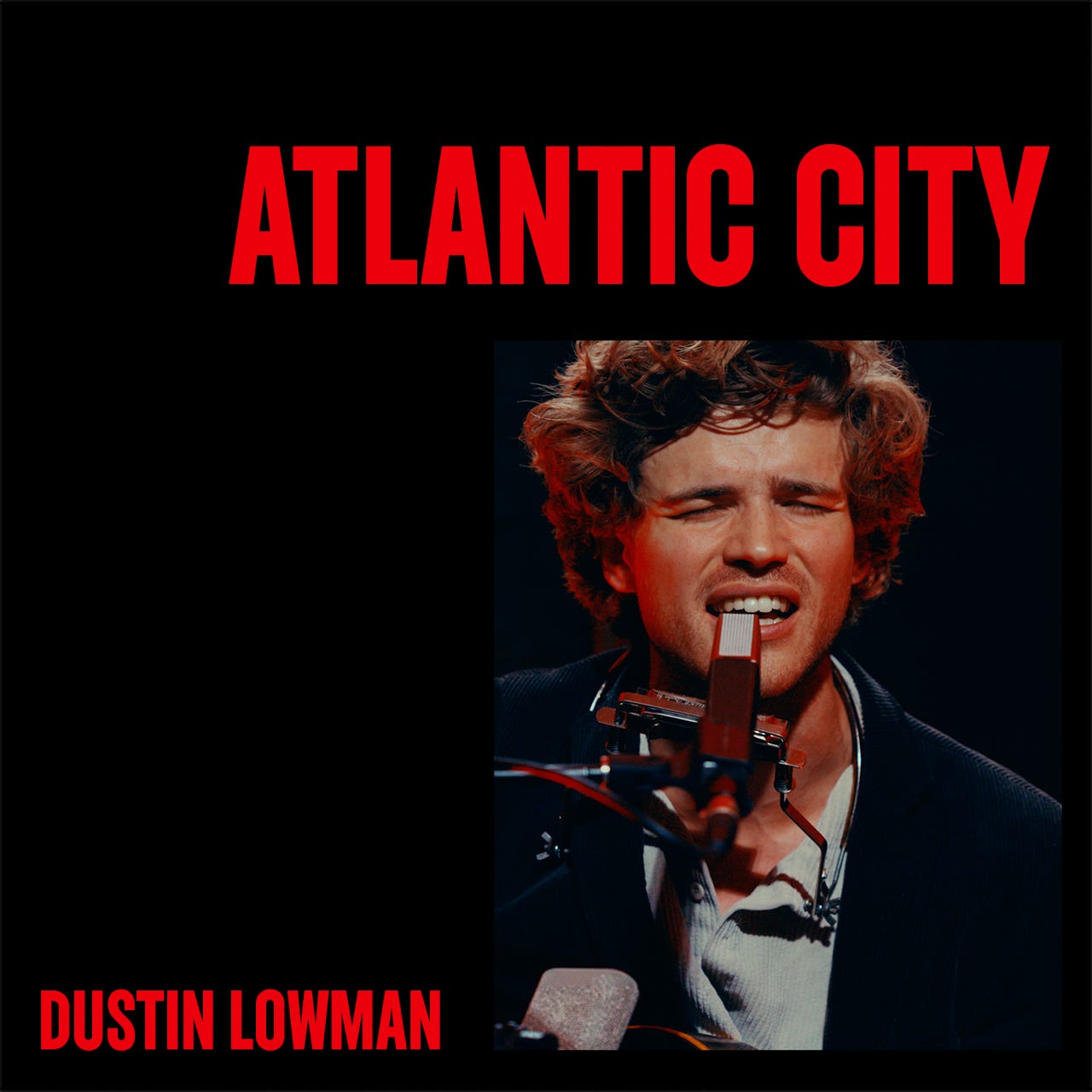
A record of my Nebraska retelling, Nebraska (Master Studies, Volume I), is available for purchase now on Bandcamp. For a foretaste of the album, you can stream lead single “Atlantic City” wherever you stream your music.
I love Nebraska, and you really did it justice here.